
Retirement Coordination
Retirement often presents one question at a time.
How much can we spend? When should Social Security begin? Which accounts should we withdraw from? Should we convert part of an IRA to Roth? How should the portfolio change once we begin spending from it?
Each question can be evaluated on its own, but the answer may affect other decisions that follow.
This section explores common retirement decisions, how they interact, and what may need to be considered before acting on any one of them.
Common Retirement Decisions
Spending & Withdrawals
How much can retirement reasonably support?
Spending establishes what your resources need to provide. From there, the questions become how much should come from dependable income, how much must come from investments, and how withdrawals may need to change over time.
Social Security & Retirement Income
Where should retirement income come from, and when?
Social Security, pensions, cash reserves, and portfolio withdrawals can begin at different times. The timing and amount of each source affect what must come from other resources and how much flexibility remains later.
Taxes, Roth Conversions & Medicare
How much can retirement reasonably support?
Roth conversions, taxable withdrawals, capital gains, required minimum distributions, and Medicare-related income thresholds can interact across multiple years. A tax decision that appears attractive today may affect other choices later.
Investments in Retirement
What responsibilities should the portfolio support?
Investment decisions should reflect how and when assets may be needed. Money intended for near-term spending may have a different responsibility from assets expected to support retirement many years from now.
How These Decisions Fit Together
These decisions are not evaluated in isolation. The Retirement Coordination Framework™ provides the structure for considering them in sequence—beginning with spending, then working through income, tax, and investment decisions.
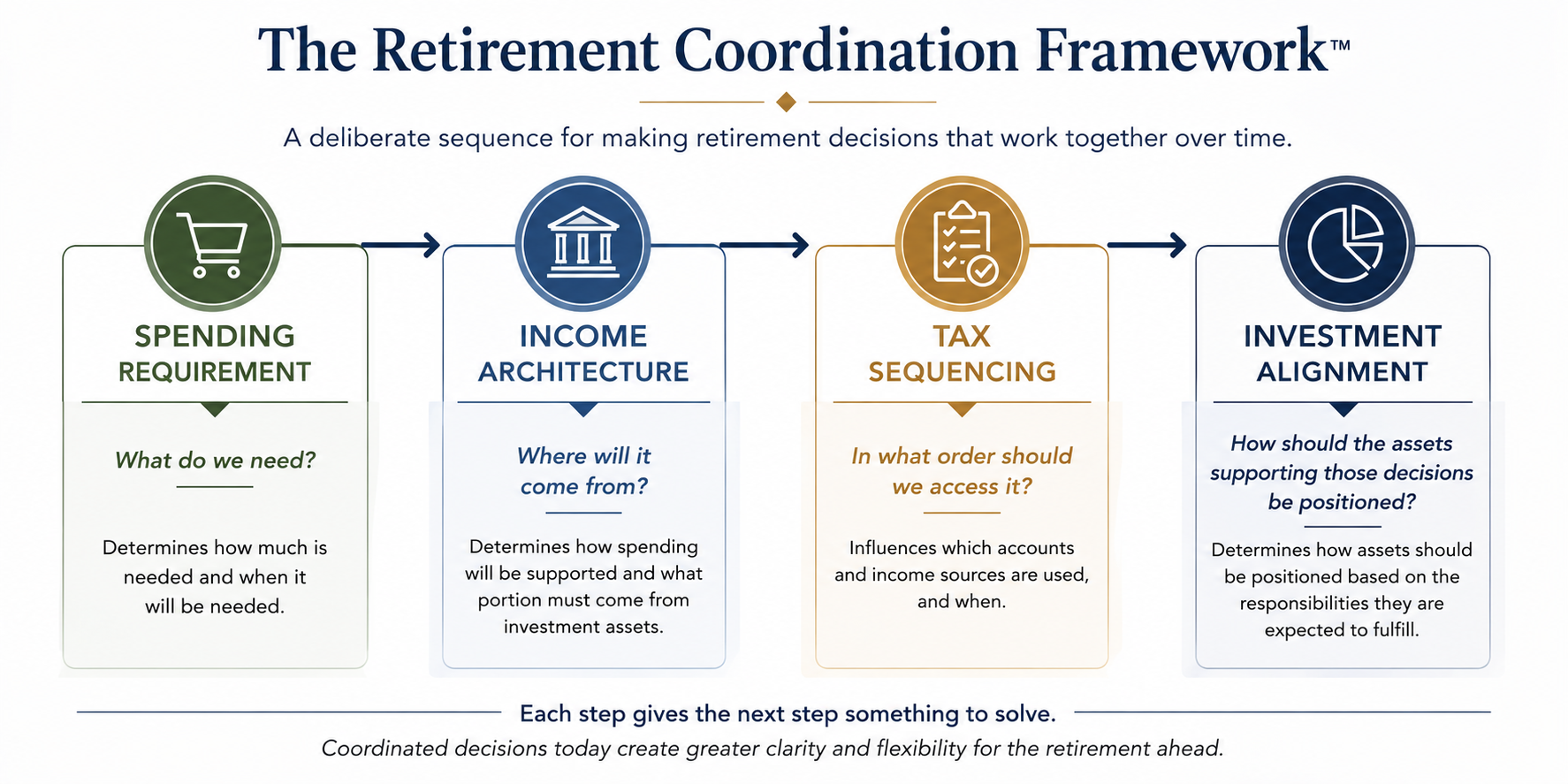
Explore the Retirement Coordination Framework
Educational Guides
The guides below take a closer look at common retirement decisions and the tradeoffs that can accompany them.
Understanding IRMAA: Why Medicare Premiums Surprise Retirees
How income timing and tax decisions can affect Medicare premiums years later—and why those consequences may not be obvious when the original decision is made.
How Retirement Income Really Works (and Why Taxes Matter)
How Social Security, pensions, portfolio withdrawals, and other resources come together to support spending—and how taxes can influence when those resources are used.
Withdrawal Sequencing Explained: How Retirees Pay Themselves Over Time
How withdrawals from taxable, tax-deferred, and Roth accounts can affect current taxes, future required minimum distributions, Medicare premiums, and later flexibility.
Why Investment Returns Matter Less Than Income Coordination in Retirement
How investment decisions change once the portfolio is responsible for supporting retirement spending and why portfolio structure should follow from those responsibilities.
How We Work
Understanding how retirement decisions interact is useful. Applying that thinking to your own situation requires deciding which issues matter now, how they affect one another, and what should be carried forward over time.
Our ongoing advisory relationship is built around that process. We help clients identify the decisions requiring attention, evaluate the tradeoffs, implement agreed-upon actions, and revisit earlier decisions as circumstances change.
Explore Whether Our Approach Fits
If you are approaching retirement or already retired and want help coordinating the decisions that come with using your retirement resources over time, we invite you to tell us a little about your situation.