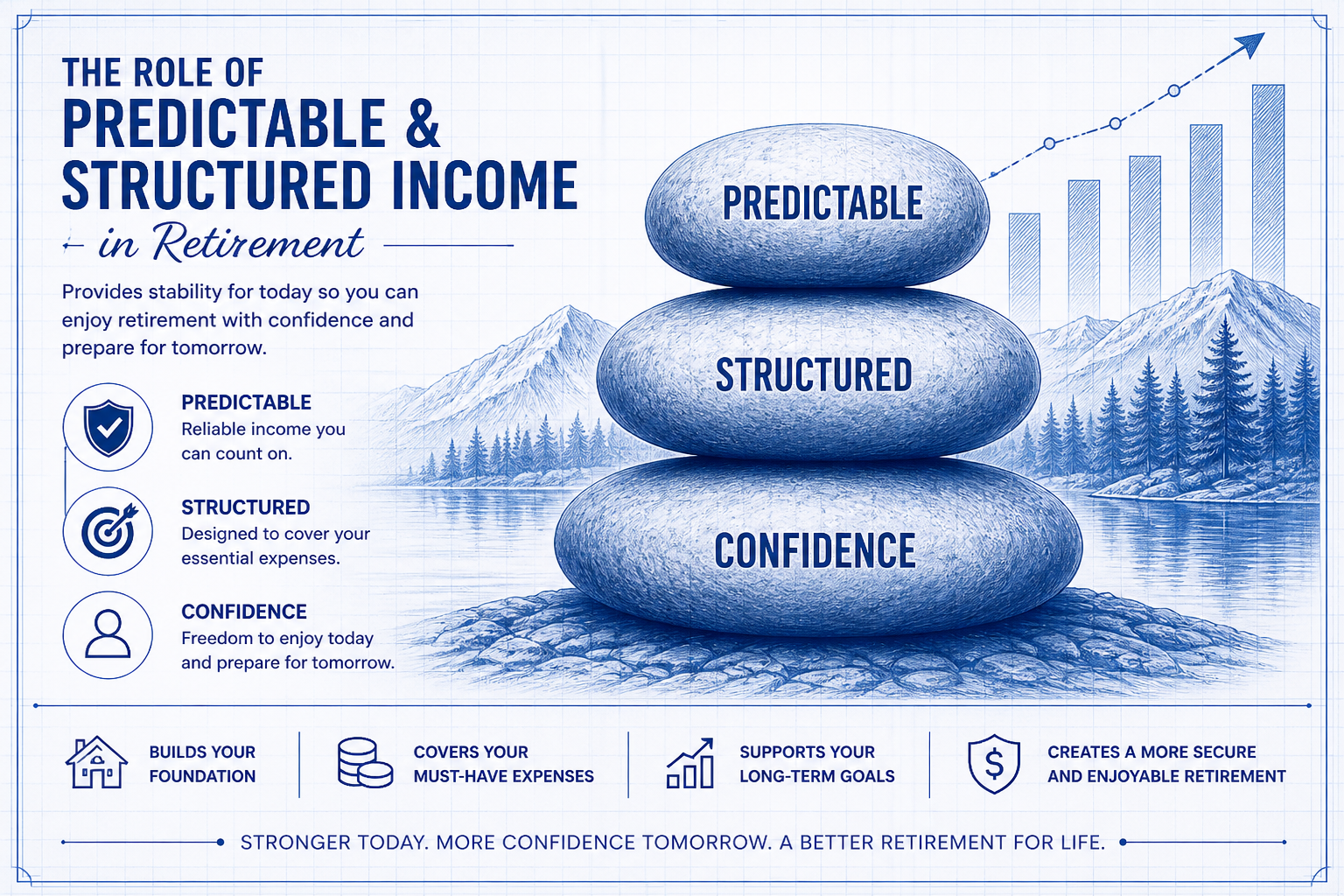
The Role of Predictable and Structured Income in Retirement
Explore how predictable and structured income fits into retirement and supports essential expenses within a balanced income framework.

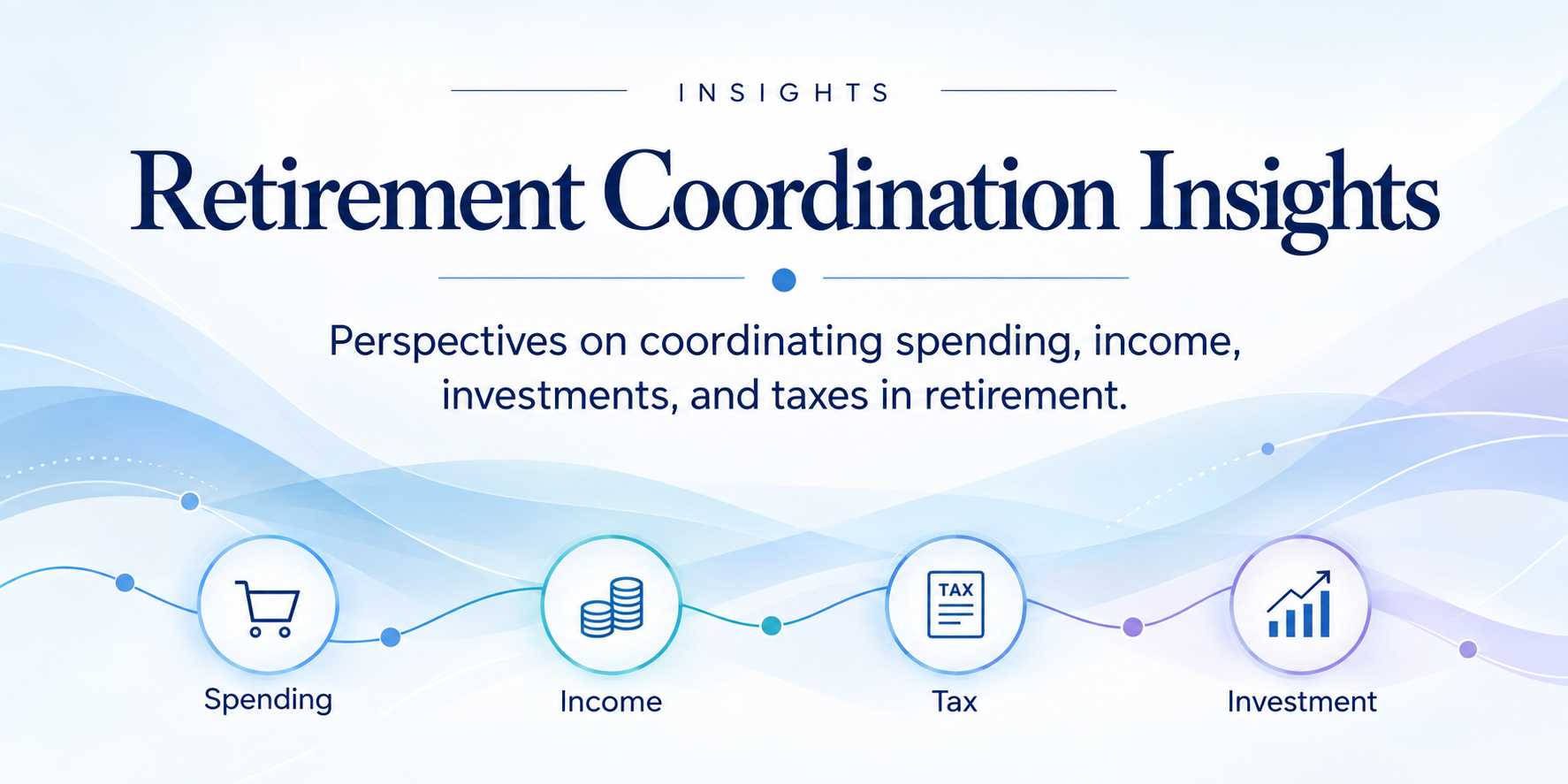
Explore how predictable and structured income fits into retirement and supports essential expenses within a balanced income framework.
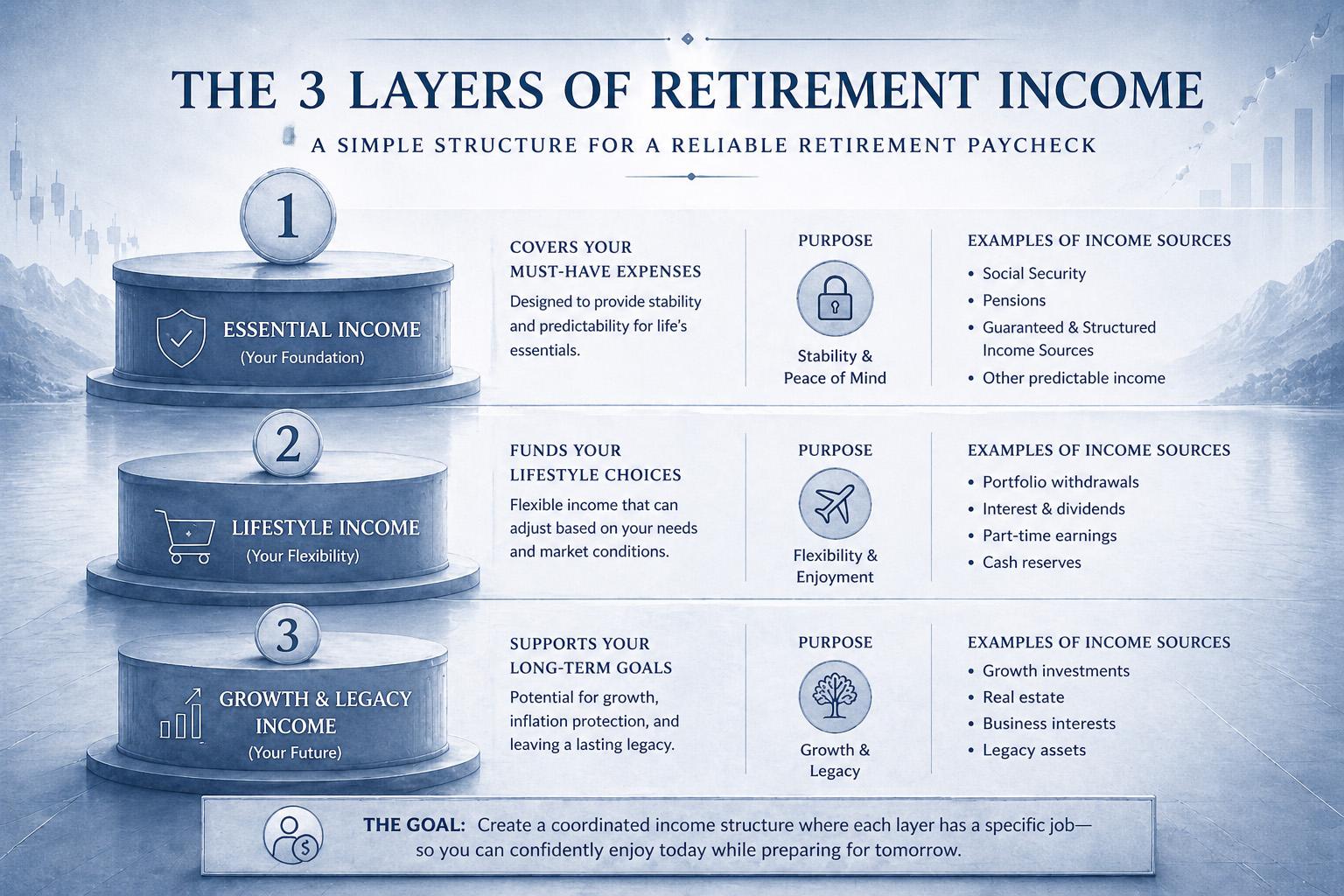
Understand the 3 layers of retirement income and how structuring income into defined roles can help create stability, flexibility, and long-term growth.
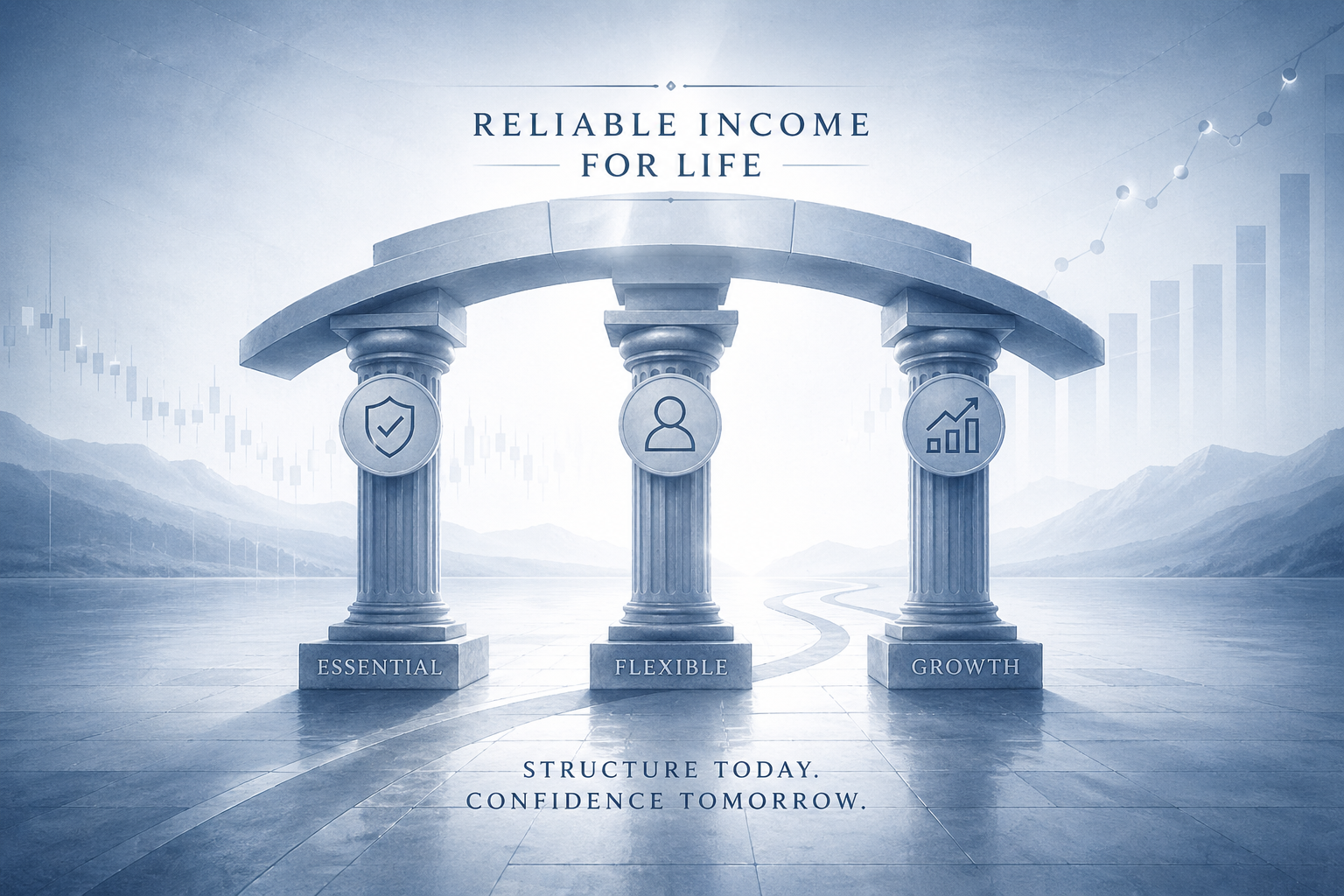
Learn how to turn your savings into a reliable retirement paycheck using a simple, structured income strategy designed for long-term clarity and confidence.

The 4% rule is often seen as a safe withdrawal strategy—but it may introduce more risk than it removes. By relying on a fixed percentage, it ignores how markets behave, how spending evolves, and how decisions are made over time. A more effective approach focuses on defining sustainable spending with flexible guardrails rather than rigid rules.

A retirement spending strategy defines sustainable spending using flexible guardrails—not rigid withdrawal rules—so you can adapt to market conditions while maintaining your lifestyle.

Sequence of returns risk is not about how much the market returns — it’s about when those returns occur. For individuals entering retirement, early market declines combined with withdrawals can permanently alter income sustainability. In this article, we examine how sequence risk affects retirement income and how structural coordination helps reduce its impact.