
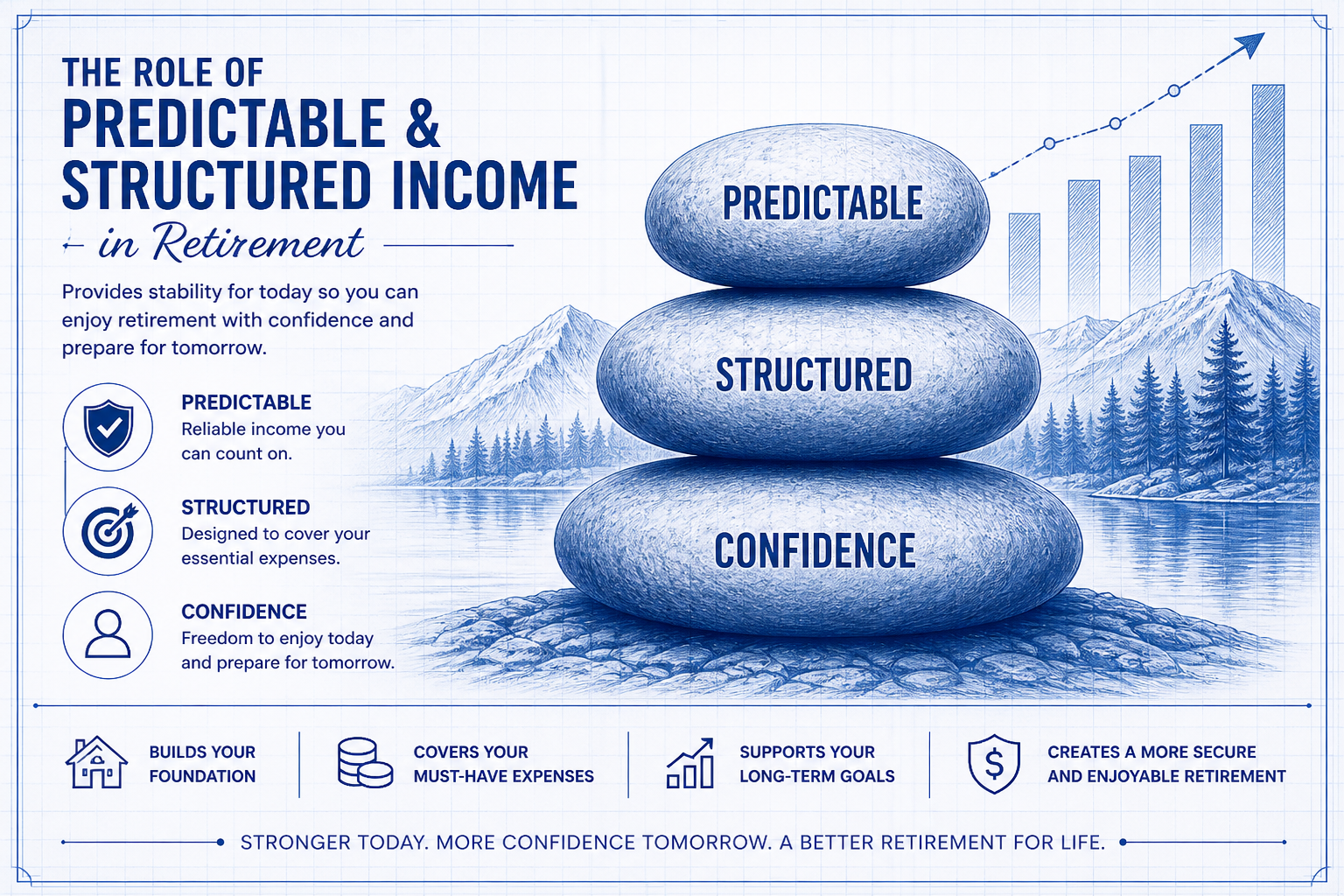
The Role of Predictable and Structured Income in Retirement
What Is Predictable and Structured Income? (Quick Answer)
- Income designed to provide consistent, reliable cash flow
- Often used for essential expenses
Why Stability Matters in Retirement Income
- Expenses remain consistent
- Markets fluctuate
- Reduces uncertainty
Within a structured framework like Income Architecture in Retirement: How to Build a Reliable Paycheck for Life, this type of income helps create a stable foundation.
Where Predictable Income Fits in a Structured Approach
These types of income sources are typically aligned with the foundation layer of a layered income structure, as outlined in The 3 Layers of Retirement Income.
Key Characteristics of Predictable & Structured Income
- Consistency
- Reliability
- Reduced market dependence
- Trade-offs (flexibility, liquidity)
How It Supports a Retirement Paycheck
In many cases, predictable and structured income helps create a more consistent retirement paycheck by covering essential expenses and reducing reliance on portfolio withdrawals. This connection is explored further in How to Turn Your Portfolio Into a Paycheck.
Balancing Stability With Flexibility
- Not all income should be fixed
- Coordination across layers matters
Common Misunderstandings
- Confusing predictability with restriction
- Over-allocating to stability
- Ignoring flexibility needs
Conclusion
Predictable and structured income is most effective when used as part of a broader system—supporting stability while allowing flexibility elsewhere.