
Spending Strategy
The First Pillar of the Retirement Coordination Framework
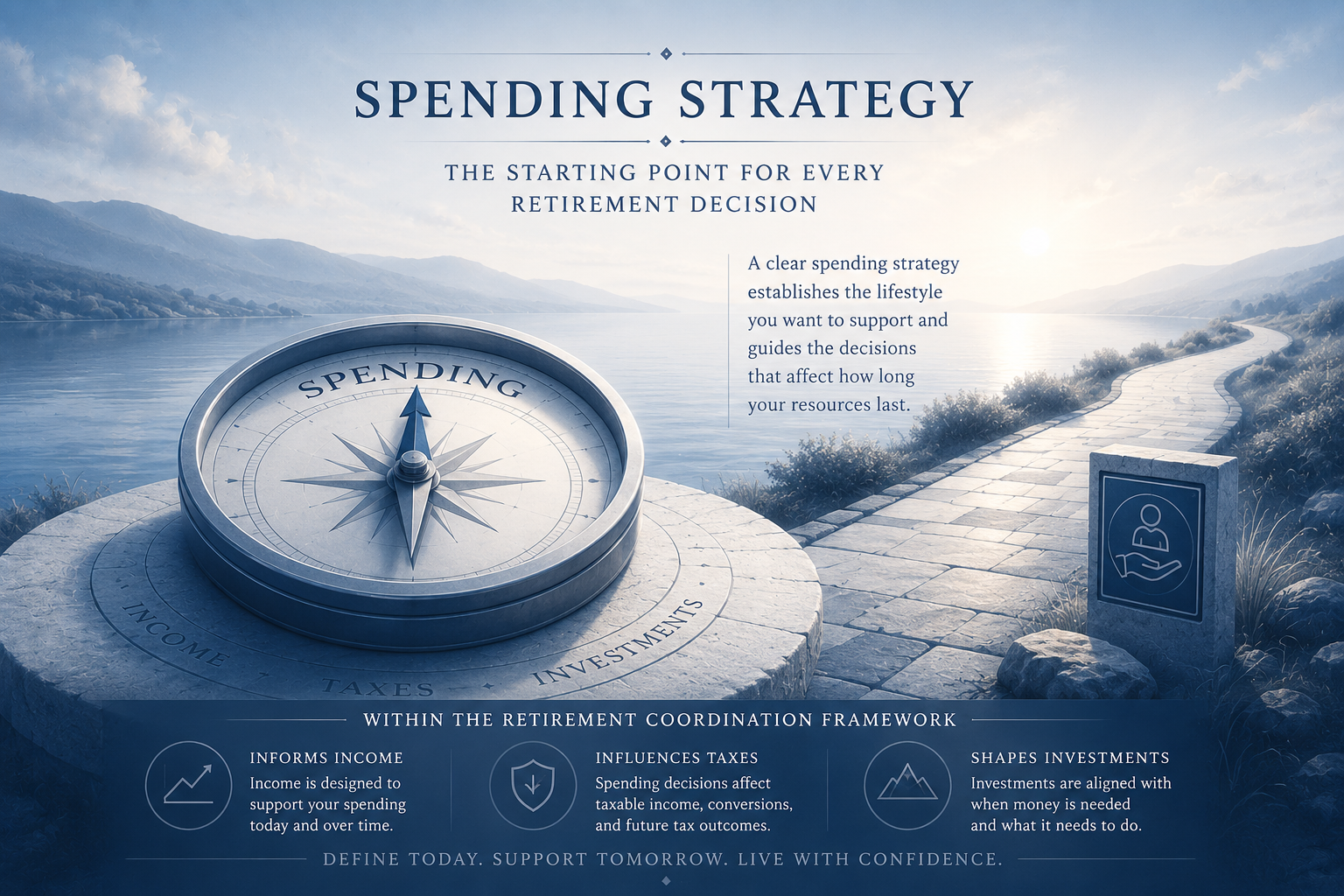
A retirement spending strategy establishes the level of spending your retirement resources are intended to support and serves as the foundation for coordinating income, taxes, and investments over time. Within the Retirement Coordination Framework, Spending Strategy is the first of four interconnected pillars because every other retirement decision ultimately supports how you plan to spend throughout retirement.
Retirement planning often begins with investments.
The Retirement Coordination Framework begins with spending.
This difference is intentional. Every retirement decision ultimately supports how you live throughout retirement. Before deciding where income should come from, how withdrawals should be managed, or how investments should be allocated, it's important to understand the spending those decisions are intended to support.
Spending establishes the purpose of the entire retirement structure. Income provides the cash flow to support spending. Taxes influence how much income remains available after taxes. Investments provide the resources that support income over time.
When spending comes first, retirement decisions become easier to evaluate because they are measured against a common objective rather than considered independently.
Why Spending Comes First
A retirement spending strategy is not simply an estimate of future expenses. It establishes the financial demands that the rest of retirement must support.
Questions such as these help shape every decision that follows:
- How much income will your retirement lifestyle require?
- Which expenses are essential, and which are discretionary?
- How might spending change over time?
- How much flexibility should be built into the plan?
- What level of spending can your retirement resources reasonably support?
These answers provide the foundation for building retirement income, coordinating taxes, and aligning investments with future spending needs.
How Spending Influences the Other Three Pillars
Income Architecture
Income exists to support spending. Social Security, pensions, portfolio withdrawals, and other income sources should work together to provide the cash flow needed throughout retirement. A clear understanding of spending helps determine how that income should be structured.
Tax Coordination
Spending decisions often influence when income is needed, which in turn affects taxes. Withdrawal timing, Roth conversions, Required Minimum Distributions, Medicare premium surcharges, and charitable giving strategies are all connected to spending decisions made over time.
Investment Alignment
Not every retirement dollar has the same job. Money needed in the near future often serves a different purpose than money intended to support spending many years from now. Investment decisions become more purposeful when they reflect those different responsibilities.
Explore Spending Strategy
The following articles explore the key ideas behind retirement spending decisions and how they fit within the Retirement Coordination Framework.
What Is a Retirement Spending Strategy?
Start here.
Learn why retirement spending is different from budgeting and why spending decisions provide the starting point for retirement coordination.
→ Read: What Is a Retirement Spending Strategy
Essential vs. Discretionary Spending in Retirement
Understand why separating essential spending from discretionary spending can create greater flexibility as retirement unfolds.
→ Read: Essential vs. Discretionary Spending in Retirement
Why the 4% Rule Creates More Risk Than You Think
Explore the limitations of fixed withdrawal rules and why retirement spending often benefits from adapting to changing circumstances rather than following a predetermined percentage.
→ Read: Why the 4% Rule Creates More Risk Than You Think
Why Spending Usually Changes More Than Retirees Expect
Learn why retirement spending rarely follows a straight line and how changing priorities, health, family circumstances, and lifestyle choices influence spending over time.
→ Read: Why Spending Usually Changes More Than Retirees Expect
Spending Is the Starting Point
Retirement decisions rarely exist in isolation. Spending influences income. Income affects taxes. Taxes shape investment decisions. Investments support future spending.
That is why Spending Strategy serves as the first pillar of the Retirement Coordination Framework.
Rather than asking, "How should I invest?" or "When should I claim Social Security?" the framework begins with a more fundamental question:
What level of spending do I want my retirement resources to support?
Once that question has been answered, the remaining retirement decisions can be coordinated within a consistent structure, allowing each decision to support the others rather than compete with them.
Next Pillar: Income Architecture
Once you've established the spending your retirement resources need to support, the next step is determining where that income should come from and how it should be structured over time.