
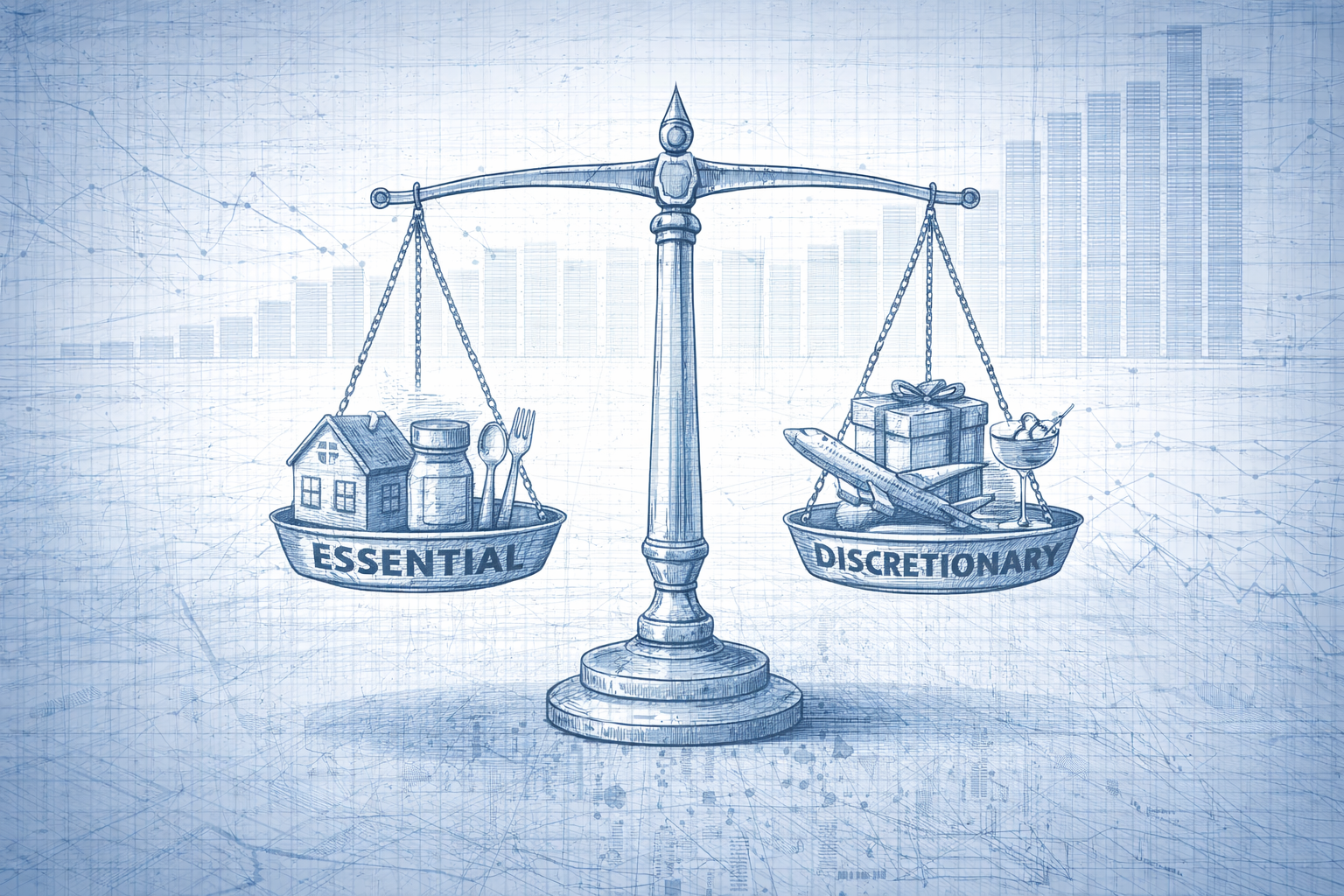
Essential vs Discretionary Spending in Retirement (Why It Matters More Than You Think)
Not all spending creates the same level of risk.
Some expenses must be covered no matter what. Others can adjust as conditions change.
Understanding that difference is what allows you to define sustainable spending—and create flexibility without losing control.
Fixed withdrawal strategies often treat all spending the same. But in reality, separating essential and discretionary spending is what allows flexibility to exist.
What Is Essential Spending?
Essential spending includes the expenses required to maintain your basic standard of living.
This typically includes:
- Housing
- Food
- Healthcare
- Insurance
- Core utilities
These are the costs that must be covered regardless of market conditions.
This forms your spending baseline.
What Is Discretionary Spending?
Discretionary spending includes lifestyle-driven expenses that can be adjusted over time.
Examples include:
- Travel
- Dining and entertainment
- Hobbies
- Gifting
These expenses enhance quality of life—but they are flexible.
Why This Distinction Matters in Retirement
When all spending is treated the same, flexibility disappears.
But when spending is separated:
- Essential expenses create stability
- Discretionary expenses create adaptability
This structure allows for better decision-making under changing conditions.
How This Connects to Sustainable Spending
Defining sustainable spending requires more than identifying a number.
It requires structure.
- Essential spending defines the minimum level of support required
- Discretionary spending creates the adjustable range above it
This is how guardrails are applied in practice.
Essential spending establishes the lower boundary, while discretionary spending allows adjustments within a structured range.
How to Structure Your Spending Categories
Step 1: Identify Non-Negotiable Expenses
Start by defining the costs that must be covered no matter what.
Step 2: Define Flexible Spending
Separate out expenses that can be adjusted without disrupting your core lifestyle.
Step 3:Align Spending With Lifestyle Goals
Ensure discretionary spending reflects how you want to live—not just what you have to spend.
How This Helps During Market Changes
Market conditions will change. The key is how spending responds.
- Essential spending remains stable
- Discretionary spending adjusts as needed
This prevents:
- Overreaction during downturns
- Unnecessary restriction during strong markets
Common Mistakes
Treating All Spending Equally
This removes flexibility and increases stress.
Overestimating Essential Expenses
This reduces your ability to adjust.
Ignoring Spending Flexibility
Without flexibility, every decision becomes more difficult.
How This Fits Into the Retirement Income Coordination Framework™
Spending is the starting point.
- Essential spending defines income requirements
- Discretionary spending creates flexibility
- Income structure supports both
This is where coordination begins.
Final Thought: Flexibility Comes From Structure
Flexibility doesn’t come from reacting—it comes from structure.
When spending is clearly defined and separated, it becomes easier to adjust within a range without disrupting stability.
That’s what makes sustainable spending possible.
FAQ
What is essential spending in retirement?
Essential spending includes necessary living expenses such as housing, food, and healthcare.
What is discretionary spending?
Discretionary spending includes flexible, lifestyle-based expenses that can be adjusted over time.
Why is it important to separate spending?
Separating spending allows for flexibility, helping you adjust without disrupting financial stability.
How do you reduce spending in retirement?
Adjust discretionary spending first while maintaining essential expenses.