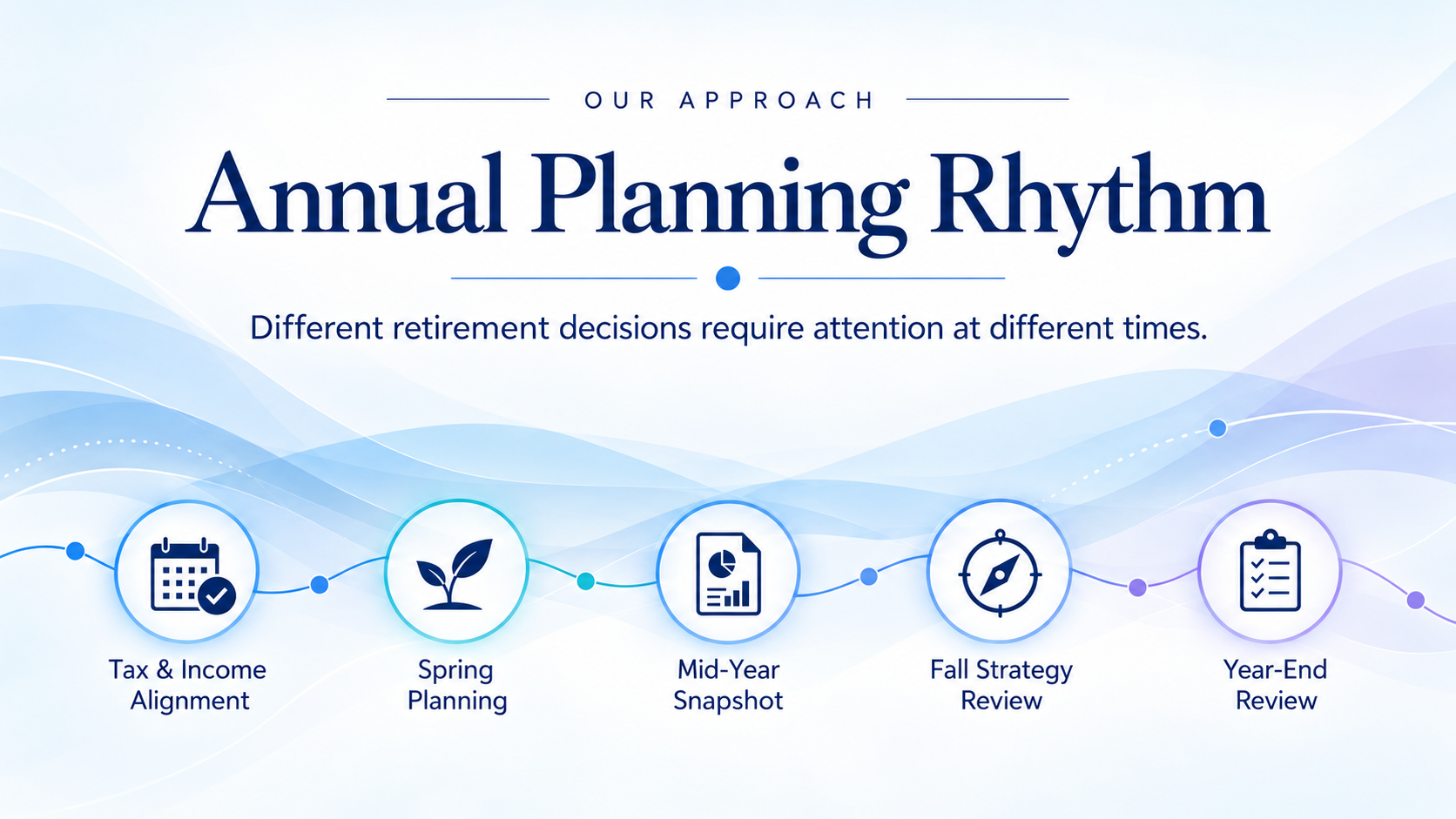
Different Retirement Decisions Require Attention at Different TimesRetirement decisions do not all need to be addressed at once.Some are driven by completed tax results. Others depend on current spending, changes in income, year-end deadlines, or developments that become relevant as the year unfolds. Our annual planning rhythm creates regular points to review what has changed, determine which decisions require attention, carry agreed-upon actions forward, and identify matters that can wait. Each part of the year has a different purpose, while the underlying work remains connected across spending, income, taxes, and investments. Before the Annual Rhythm Begins
Foundational Coordination Phase (Year One)
Before the recurring annual planning rhythm begins, we first establish the starting point for the relationship. During the Foundational Coordination Phase, we gather and review your financial information, understand how your retirement resources are currently structured, identify the decisions that require attention first, and establish the initial direction for spending, income, taxes, and investments. Focus:
The phase includes two primary review meetings: Foundational Coordination Summary Meeting
Investment Guide Review
If we manage your investments, we implement the agreed-upon changes. If you manage your own accounts, the Investment Guide provides the recommendations for you to implement. Once the Foundational Coordination Phase is complete, the relationship moves into the recurring annual planning rhythm.
Tax & Income Alignment Review
Purpose: Use completed prior-year tax results to inform current-year income and tax decisions. Focus:
The Tax & Income Alignment Review uses completed tax results to establish the starting point for current-year income and tax decisions. We review what actually occurred, compare those results with prior assumptions, and determine whether current-year withdrawals, withholding, Roth conversions, or other income decisions should be adjusted. Tax return preparation and filing are separate from this review. Our role is to evaluate the completed results and incorporate their implications into current and future retirement decisions.
Spring Planning
Purpose: Establish direction for the primary retirement decisions and priorities of the year. Focus:
With prior-year tax results incorporated, Spring Planning turns attention to the year ahead. We review the decisions and priorities that currently matter most and determine whether changes in spending, income, taxes, investments, or household circumstances warrant adjustments to earlier recommendations. The decisions made during Spring Planning establish direction for the months ahead and provide the starting point for later reviews as new information becomes available.
Mid-Year Snapshot
Purpose: Provide a written mid-year checkpoint on progress, changes, and matters requiring attention before year-end planning. Focus:
The Mid-Year Snapshot provides a written update on how the year is progressing. We review developments since Spring Planning, document progress on previously identified actions, and identify changes that may affect decisions during the remainder of the year. The objective is to make clear what has been completed, what has changed, and what—if anything—requires attention before the Fall Strategy Review.
Fall Strategy Review
Purpose: Address decisions that require action before year-end and identify known considerations for the coming year. Focus:
The Fall Strategy Review focuses on decisions that require attention before year-end. We evaluate income, tax, investment, and cash-flow considerations together and determine what actions should be completed before applicable deadlines. The review also identifies known developments, opportunities, and constraints that may affect decisions in the coming year.
Year-End Review
Purpose: Document the year’s completed advisory work and establish the starting point for the next planning cycle. Focus:
The Year-End Review summarizes the advisory work completed during the year and documents actions taken following the Fall Strategy Review. We review completed decisions, year-end distributions and transactions, and progress on priorities established earlier in the year. The review also identifies matters carrying forward and records known developments that may affect the next planning cycle, including items to revisit during the upcoming Tax & Income Alignment Review. |