
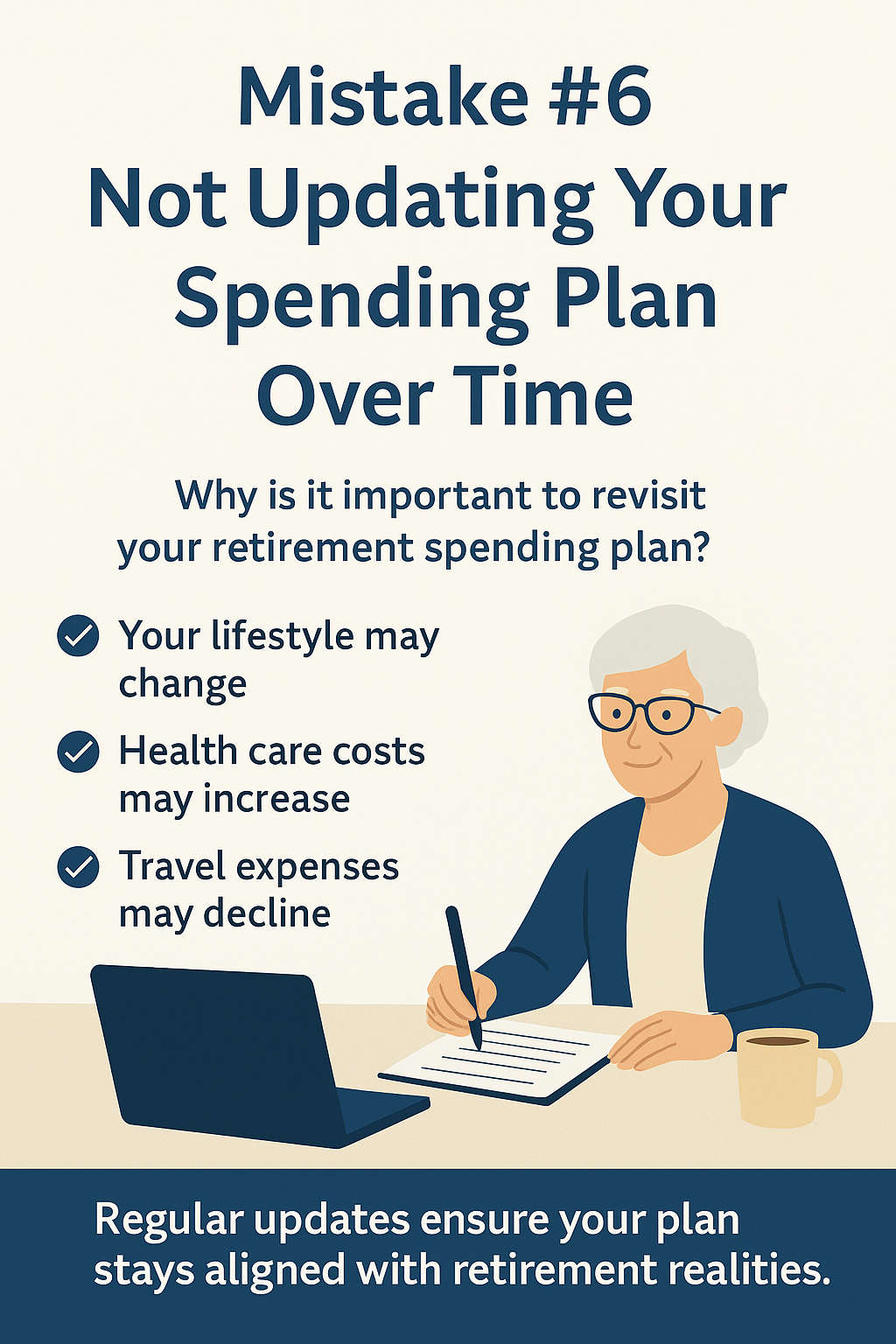
Mistake #6: Not Updating Your Spending Plan Over Time
Your spending in retirement isn’t static. Failing to adjust your plan as your lifestyle, goals, and health change can lead to either overspending early or underspending out of fear—both of which can limit your financial freedom.
Q: Why do retirees need to revisit their spending plans?
A: Because your retirement evolves—and so should your spending.
Most people enter retirement with a plan based on averages. But real life doesn’t follow a smooth curve. Health needs change. Travel slows down. New priorities emerge. If your spending plan doesn’t keep up, you could:
- Overspend too early and risk running short
- Underspend and miss out on experiences you could afford
- Fail to align your cash flow with how your life actually looks
Your Retirement Has Phases—So Should Your Spending
- Early Retirement (Go-Go Years): Travel, hobbies, grandkids, fun
- Mid-Retirement (Slow-Go Years): Fewer big expenses, stable spending
- Late Retirement (No-Go Years): Healthcare rises, discretionary drops
If your spending plan assumes a flat withdrawal rate forever, it misses these natural shifts.
Real Example – Spending Too Conservatively
A Portland retiree came to us five years into retirement with a question: “Can I afford to take my dream trip to Italy?”
Her initial advisor had used a very conservative withdrawal rate. We showed her:
- Her portfolio had grown despite regular withdrawals
- She could afford more discretionary spending now
- If her goals changed later, the plan could adjust again
She took the trip. And we built in space for others like it.
How to Keep Your Spending Plan Current
1. Review Annually
- Compare actual spending vs. planned
- Adjust for inflation and lifestyle changes
- Revisit assumptions about healthcare, travel, and support needs
2. Use a Flexible Withdrawal Strategy
- Dynamic spending plans can adapt to market performance
- Incorporate guardrails, not rigid percentages
3. Align Income With Your Life Phase
- Use the RISA to understand your preferred income style
- Match predictable income or flexible withdrawals to your goals
Conclusion: A Living Plan Supports a Living Retirement
Retirement isn’t “set it and forget it.” Your needs, health, and lifestyle change over time—and your spending strategy should, too.
As a Portland-based retirement income advisor, I help clients build plans that grow and evolve with them. Through annual updates and tools like the complimentary RISA, we create confidence—not just on day one of retirement, but for every phase after.
FAQs
Q: How often should I review my retirement spending plan?
A: At least once a year—or after major life events, like a health change or new financial goal.
Q: What if I’m spending too little?
A: That’s more common than you think. A flexible plan can help you spend confidently without fear of running out.
Q: Can I increase spending later in retirement?
A: Yes, especially if early withdrawals were conservative or markets performed well. It’s about adjusting responsibly.