
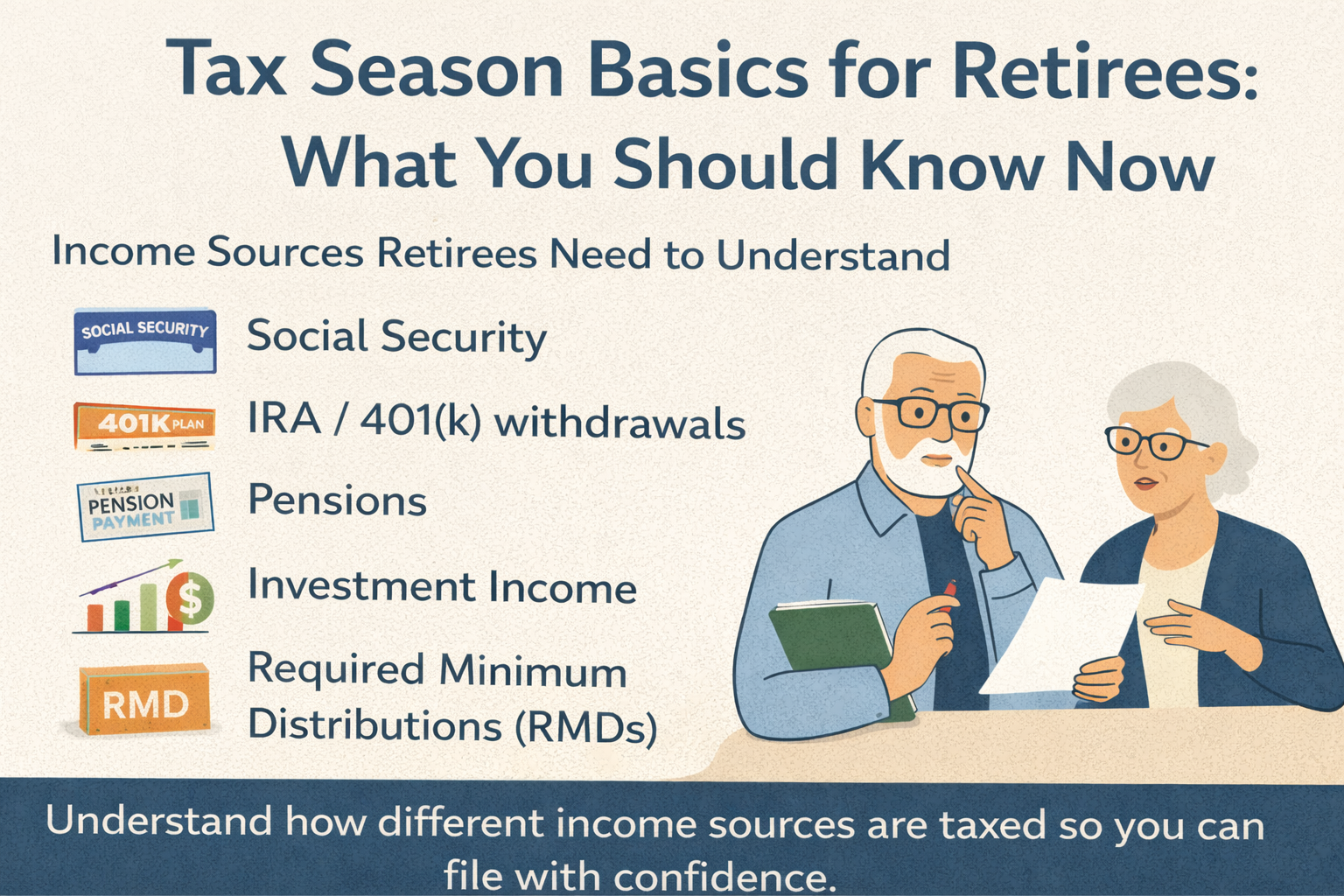
Tax Season Basics for Retirees: What You Should Know Now
Retirees need to understand how different income sources—Social Security, IRA/401(k) withdrawals, pensions, investment gains, and required minimum distributions—are taxed. Knowing what to report, when to file, and what forms you’ll need helps you avoid surprises and keep more of your money.
Q: What income counts as taxable for retirees?
A: Not all retirement income is treated the same. Here’s the quick breakdown:
- Social Security: Up to 85% may be taxable depending on total income.
- IRA/401(k) distributions: Taxed as ordinary income.
- Pensions: Taxable as income.
- Investment income (interest/dividends): Taxed at ordinary or preferential rates.
- Capital gains: Taxed based on how long you held assets.
Important Tax Forms for Retirees
- Form 1099‑R: Shows IRA/401(k)/pension distributions.
- Form SSA‑1099: Shows Social Security benefits.
- Form 1099‑B: Investment sales and capital gains.
- Form 1099‑INT/1099‑DIV: Interest and dividends.
- Form 1099‑MISC/NEC: Other income (if any).
Filing Deadlines You Can’t Miss
- April 15: Standard federal tax filing due date
- October 15: Extended deadline (if you file an extension)
- Quarterly payments: If you have significant non‑withheld income
Pro tip: Estimate any taxes early so you don’t get hit with underpayment penalties.
Common Deductions & Credits for Retirees
- Standard Deduction: Often the best default for many retirees
- Medical Expense Deduction: If eligible, you can deduct medical costs above a threshold
- Charitable Donations: Especially via Qualified Charitable Distributions (QCDs) from an IRA
Social Security and Taxation
The IRS looks at your combined income to decide how much of your Social Security is taxable:
- Low combined income → little or no tax on benefits
- Higher combined income → up to 85% taxable
Planning withdrawals and timing distributions can reduce how much of your Social Security gets taxed.
Tips to Avoid Common Filing Mistakes
- Don’t forget to include all 1099 forms
- Watch for duplicate basis reporting on investment sales
- Check withholding amounts on retirement distributions
- Verify Medicare IRMAA adjustments aren’t based on outdated income
Conclusion
Tax season doesn’t need to be stressful. A good understanding of what income is taxable, which forms you need, and smart timing of withdrawals can make filing smoother and keep more of your retirement income working for you.
As a Portland‑based retirement income advisor, I help retirees understand their tax picture and build strategies around it. If your last tax return raised questions, start with a review to identify opportunities before the next filing.
FAQs
Q: Do I always have to pay taxes on Social Security?
A: Not always — it depends on your total income levels.
Q: What if I didn’t receive a tax form?
A: Check your accounts early in the year; missing a form may mean a late issuer or online delivery.
e
A: It can be smart to withhold to avoid surprise tax bills at filing time.